
- Products
- Indoor Mini Plants
- Diffenbachia Camille
Diffenbachia Camille
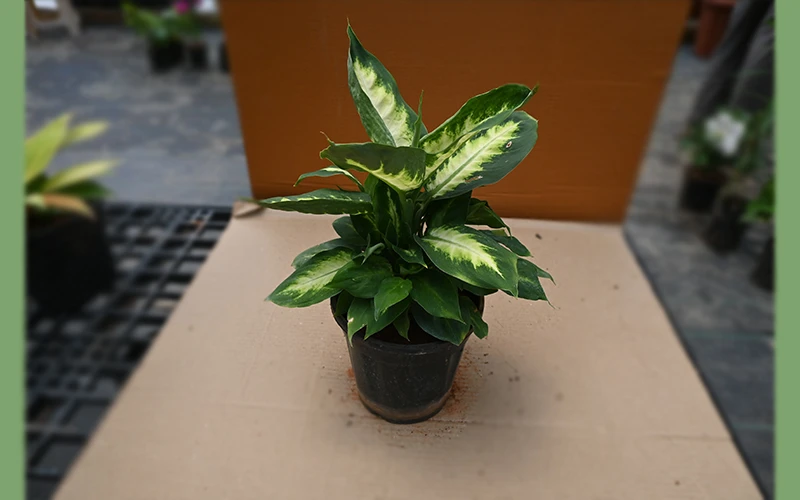
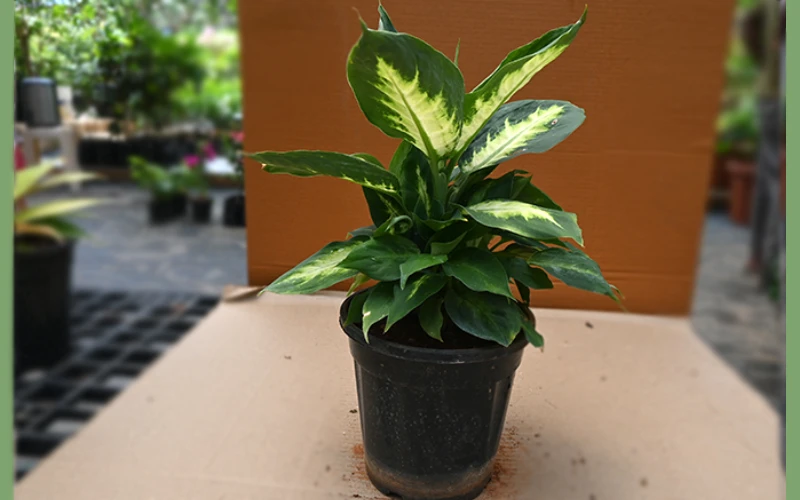
Dieffenbachia Camille, also known as Dumb Cane, is a popular, attractive houseplant with striking variegated leaves, featuring a mix of dark green and creamy white. It's known for its air-purifying qualities, ability to tolerate low light, and relatively easy care.
Click To View Cart
Key Characteristics:
- Appearance: Large, oval-shaped, paddle-shaped leaves with dark green margins and creamy white centers.
- Size: Can grow up to 3 feet tall and 2 feet wide.
- Light: Prefers bright, indirect light, but can tolerate lower light conditions.
- Watering: Allow the top inch of soil to dry out between waterings, avoid overwatering.
- Soil: Well-draining potting mix rich in organic matter.
- Temperature: Thrives in warm conditions, 65°F to 75°F (18°C to 24°C).
- Humidity: Appreciates high humidity but can tolerate average household humidity.
- Toxicity: Contains calcium oxalate crystals (raphides) that can cause irritation if ingested.
Care Tips:
- Watering: Water thoroughly when the top inch of soil is dry, ensuring excess water drains out.
Light: Place in a location with bright, indirect light, avoiding direct sunlight.
Soil: Use a well-draining potting mix, repot every 2-3 years.
Fertilizing: Feed with a balanced, diluted fertilizer every 4-6 weeks during the growing season.
Humidity: Mist leaves or use a pebble tray to increase humidity, especially during dry winter months.
Toxicity: Keep away from children and pets to avoid accidental ingestion. Benefits:
- Air Purification: Dieffenbachia Camille is known for its ability to remove xylene and toluene from the air.
Aesthetic Appeal: The striking foliage makes it a popular choice for interior decoration.
Relatively Easy Care: It can tolerate various indoor environments and is relatively low-maintenance. Potential Issues:
- Overwatering: Can lead to root rot, so ensure proper drainage and allow the soil to dry slightly between waterings.
Leaf Burn: Direct sunlight can scorch the leaves, so provide filtered light.
Toxicity: The plant contains irritants, so caution should be taken to prevent ingestion.